Straight after the keynote, the main stage hosted the most practically useful hour of the morning: a panel called "Scaling from the edge — New Zealand's climate tech opportunity," brought to the summit by the European Union Delegation to Aotearoa New Zealand and chaired by Phil Anderson of Sphere NZ. On stage with him were Alice Havill of Fractal Climate, Bernadette Casey, founder of textile clean-tech company Usedfully, and His Excellency Mr Luis Sánchez-Vellisco Sánchez, Spain's Ambassador to New Zealand.
It was, in effect, a clinic on the unglamorous middle of a company's life — validation, capital, regulation and the specific mechanics of landing in a foreign market. Here's what was said, and why it's worth reading twice.
The invitation: "come to Europe"
The session was set up by Eoghan Walsh, who manages the EU's climate-tech engagement here. His pitch to the room's founders was direct. Europe, he argued, is where a Kiwi climate company should be looking to scale — not despite its rules, but because of them. "We have the regulatory environment to support you," he said. "We have 450 million consumers in a single market who care about these things."
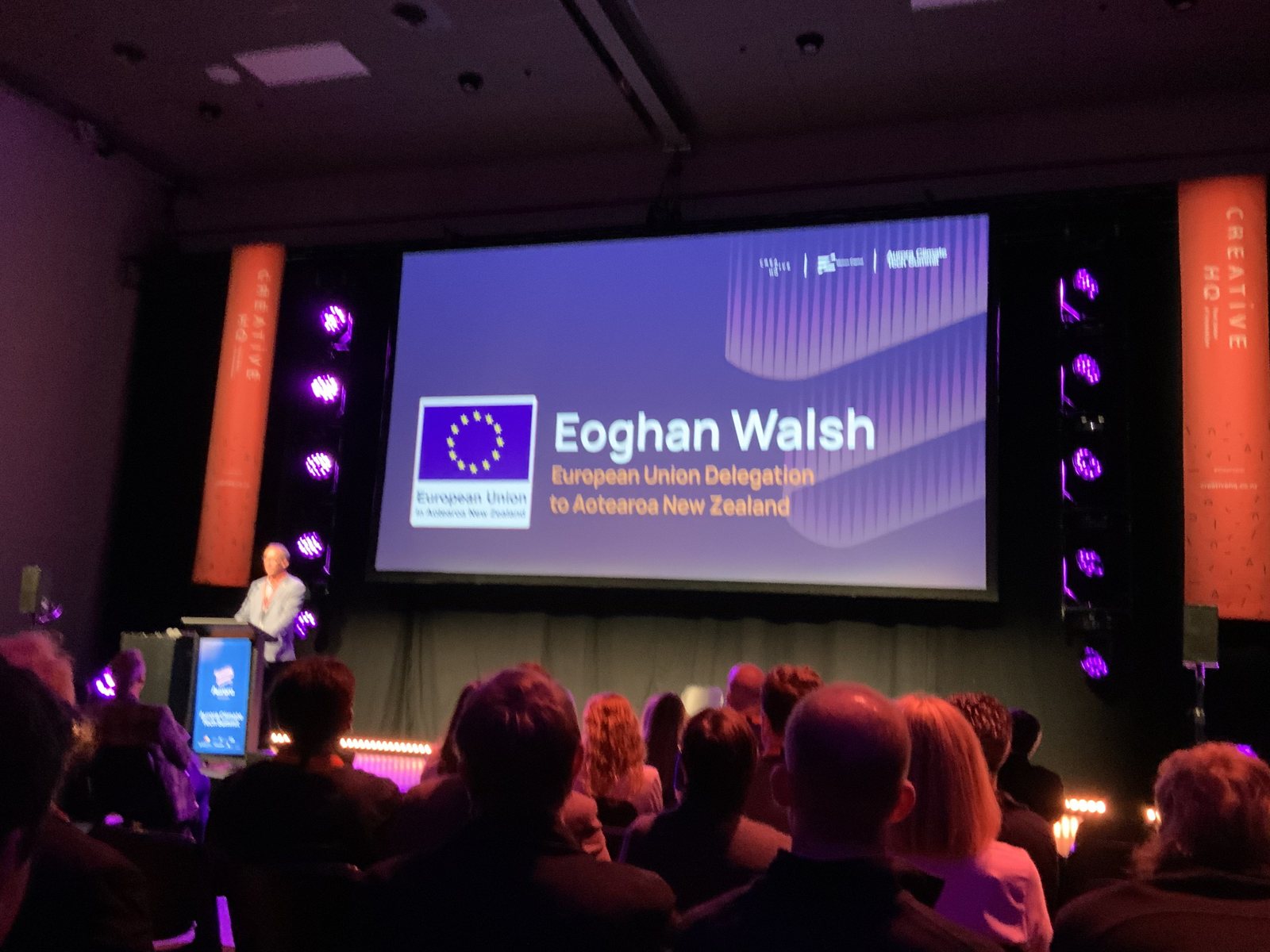
Eoghan Walsh of the EU Delegation set up the panel — and flagged the EU–New Zealand Clean Tech Summit coming to Christchurch in April 2027.
He also flagged the date worth putting in the diary: an EU–New Zealand Clean Tech Summit in Christchurch on 5 April next year, designed to bring innovators, investors, policymakers, regulators, supply chains and markets into the same room.
Sphere NZ: "we're good at the start, bad at the middle"
Anderson framed the national problem with the ease of someone who has watched it happen many times. "In this country we're really good at getting innovation off the ground," he said. "What we're not really good at is helping them go global." That, he explained, is why Sphere NZ exists — to help Kiwi companies "go global, go big." It set the theme for everything that followed: New Zealand's weakness isn't invention, it's the leap.
Bernadette Casey and the six pails
The heart of the session was Casey's story, because it was so concrete. Usedfully takes waste textiles and turns them into industrial precision fibres — solving both the textile-waste crisis and the need to decarbonise infrastructure materials. She has spent twenty years in the circular economy, from the United States to the UK and Europe, before returning to New Zealand a decade ago to lead the industry co-design of the country's textile circular economy.
Her path to Europe was not a straight line. An early trial in California, converting LA-based uniforms, worked technically — but the economics didn't stand out in a small, remote market. "It just didn't stand out economically in a small, remote island nation like New Zealand," she said. That failure produced the right question: what is the highest-value product these textile resources could become? The answer came from the Bioeconomy Science Institute, which had developed a process for the timber industry that Usedfully adapted for textiles.
Then came the pull. In Europe, regulation was already forcing textiles to be collected, but the technology to process them hadn't scaled. "Warehouse after warehouse, stacked to the gunnels, full of textile waste, but very little solutions out the other end," she said. "They were desperate for solutions… the market was white hot and ready." That's when Usedfully decided to make the jump.
The validation moment she described should be printed and pinned above every founder's desk. Outside their office one day sat six pails that had been returned — product that supposedly hadn't formed. "They opened every single one of them. None of them were our product. They were the previous product that we displaced," she said. The contractors had been coming back because the new material simply performed better. "For us, it was completely gold."
"New Zealand's great for validating — and because you're a really small market, it proves things out really, really quickly. Overseas, a lot more money can flow into technologies before anyone proves whether they're economically viable. Here, we don't have that luxury." — Bernadette Casey, Usedfully
The part founders don't talk about: capital and where it lives
Casey was refreshingly frank about why the destination is Europe and not the United States — and it came down to who actually funds companies like hers. Capital going to female founders in the US, she noted, has fallen to a "very miserable" 1–2%. Europe, by contrast, offers "a real whole-of-ecosystem approach to funding" — not just venture capital, but government capital alongside it. Usedfully is relocating to Limburg in the Netherlands, where each regional investment agency has roughly €800 million to deploy into startups, and a company at the right technology-readiness level can access around €5 million through the regional development agency alone.
The destination within Limburg is Brightlands, a state-of-the-art circular-economy campus — a former chemical site repurposed by the Dutch government and Maastricht University for climate tech. Usedfully was one of just twelve companies accepted, she said, in part because it arrived already validated. "You can build a full commercial, industrial-size venture there," she said. "It's everything all at once, on one campus."
And — a detail that matters for the "keep the value at home" argument — because Usedfully's foundational technology came out of the Bioeconomy Science Institute, the royalties it pays flow back to New Zealand to fund the next generation of clean tech. Scaling offshore, done this way, sends money home rather than draining it.
Her parting advice to other founders was disarmingly simple: "It always takes longer than you think it's going to take."
Alice Havill: the validation ladder
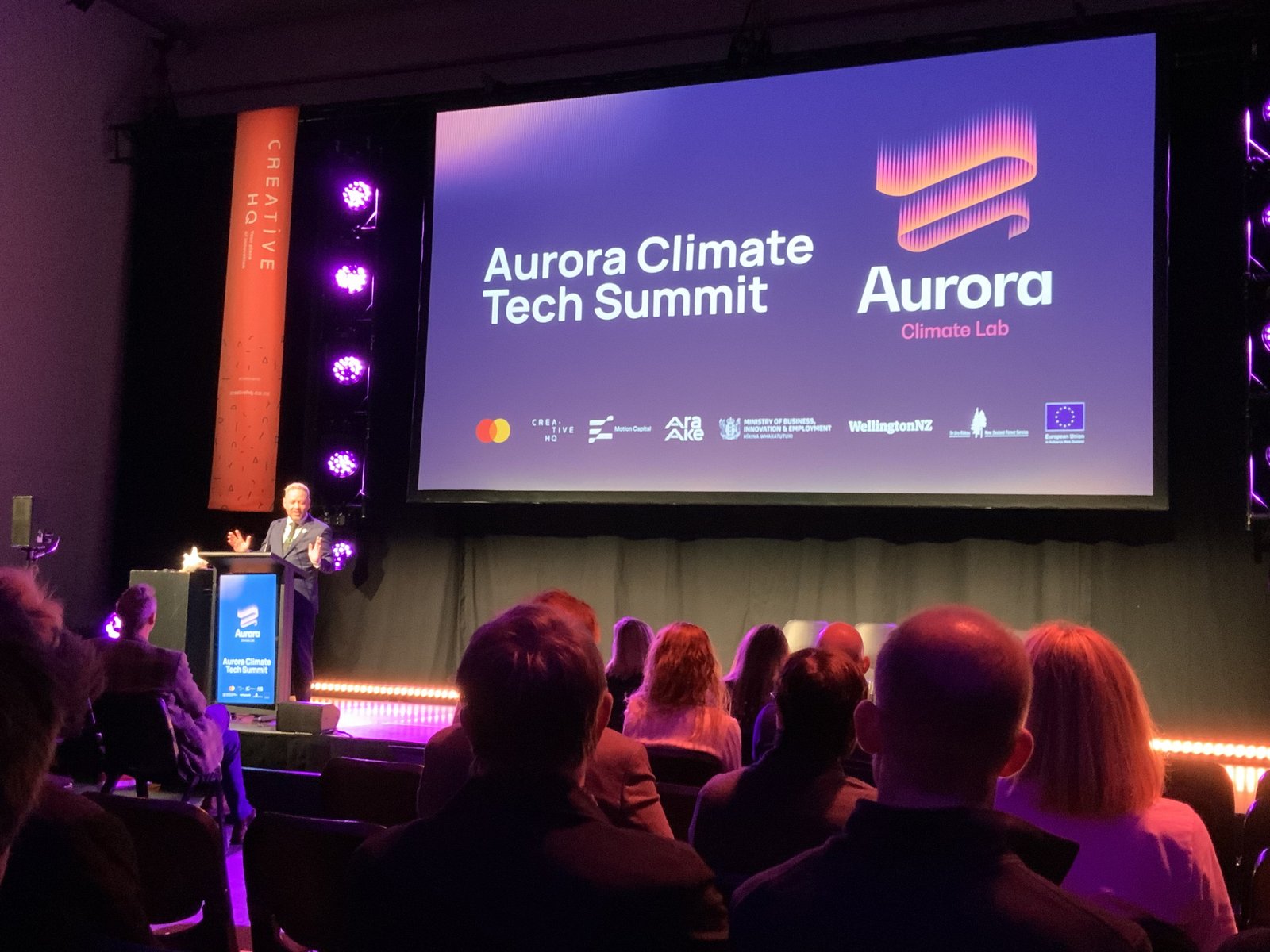
Shed 6's main stage, where the keynote and this panel played out.
Picking up her keynote themes, Havill turned the conversation into something founders could act on: a ladder of validation that de-risks a company in an investor's eyes.
The first rung is a letter of support. "'I'm BASF, I'm Patagonia, I'm BP, and the problem this company is working on is the problem we think is really important,'" she said, voicing the kind of testimonial that changes a conversation. From there it climbs — to a joint development agreement, and then to the things that actually build a company: joint ventures, commercial offtake agreements, even acquisitions.
She was careful about the direction of that validation, too. A good investor, she said, "will invest in a company that's solving a really hard problem, even if the solution's half-baked" — but not the reverse. "Having a hammer to find a nail isn't going to work." Start from a problem the market has confirmed is real, not from a technology you happen to love.
Underneath the ladder was a reframing she returned to more than once. The market, she argued, is no longer paying for virtue. "We're not talking about climate premiums; we're talking about value premiums." In a world where households in Italy are "barely able to pay their power bills" at four times the price, a product wins on performance and cost — and the climate benefit comes along for the ride. And as in her keynote, she insisted the core can stay onshore: export the IP, the maintenance plans and the control systems, "more efficient than exporting tanks and pipes and valves."
The Ambassador: a single market, and a very fast grid
Ambassador Sánchez-Vellisco gave the session its geopolitical anchor, and some genuinely striking numbers. Start with access: the EU–New Zealand Free Trade Agreement came into force in 2024, and there are eight resident EU member-state embassies in the country. "You can come to us," he said.
Then the case study — Spain's own grid. In 2025, he said, 75% of Spain's electricity generation was free of carbon emissions and 55% came from renewable sources, with close to 10 gigawatts of renewable capacity added in a single year. The 2030 target is 81% renewable electricity. His framing of why was the sharpest line of the panel: energy security and climate policy "have converged… it is just one agenda." The payoff, he argued, is price stability: through the recent energy shocks, Spanish wholesale electricity prices stayed among the lowest in Europe — at one point during disruption in the Strait of Hormuz, he said, Italian wholesale prices ran to roughly four times Spain's, because Italy's price was still set by natural gas. He pointed to the EU's Critical Raw Materials Act and to H2MED, described as the bloc's first major renewable-hydrogen corridor.
For a founder, his most important point was structural. "Europe is a single market, so we don't care if you are in the Netherlands or in Spain — it's the same. You are in the European market." Land anywhere, in other words, and you can use it as a hub for all of it. He also pointed to Horizon Europe as a live channel for New Zealand and European researchers to collaborate, and extended an invitation to the Clean Tech Forum in Sitges, near Barcelona, on 10–12 November — the first time the forum has been held in Spain in twelve years.
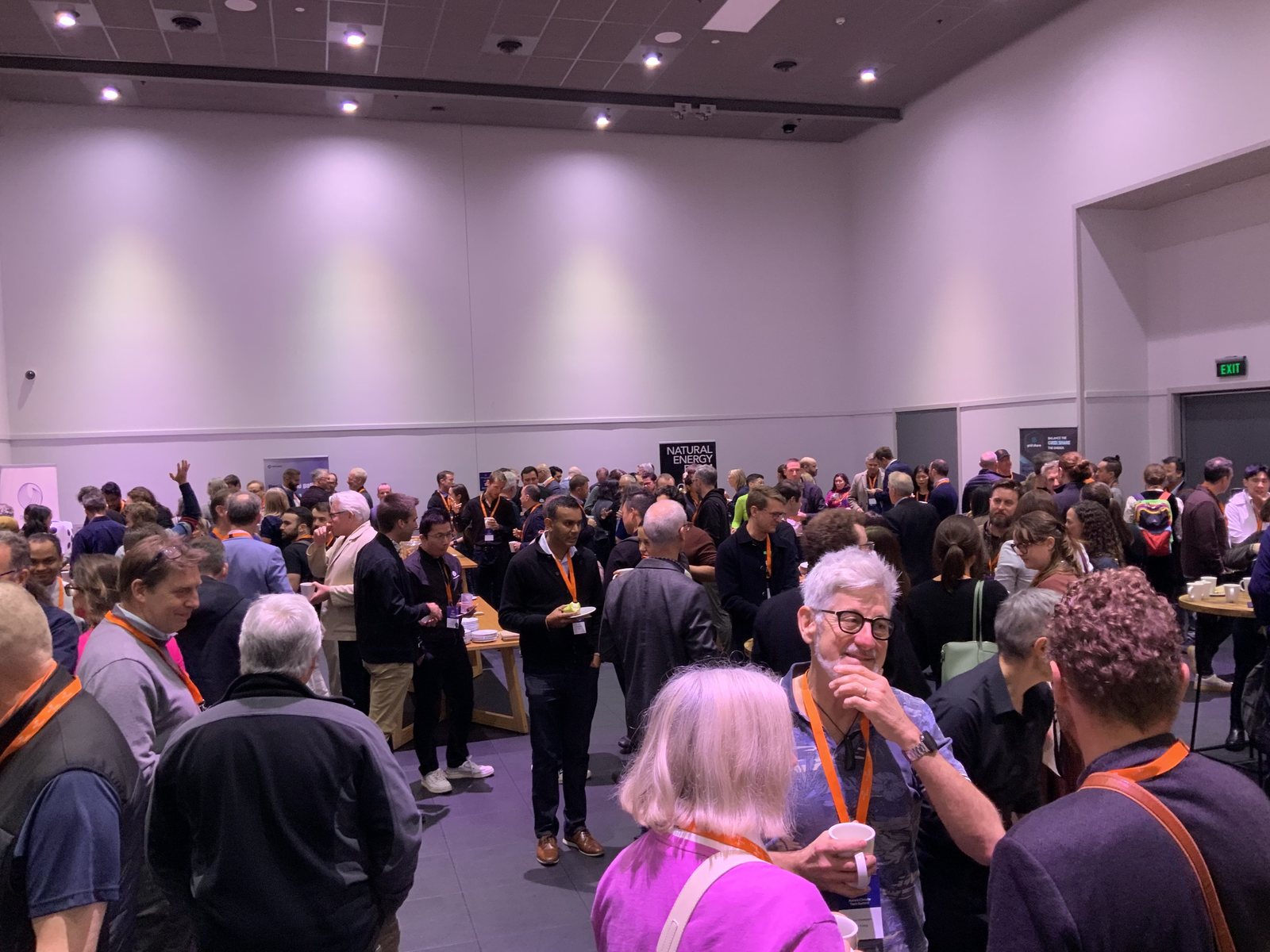
The conversation spilled straight into morning tea — the connections Havill called "the asset we're not using."
For founders
Field notes: what a founder should take away
- Validate hard at home first (aim for ~TRL 8). NZ's small market forces the economics to prove out fast — use that. "Until you know what it is you have and why it solves a problem, there's no point leaving."
- Climb the validation ladder: letter of support (BASF/Patagonia/BP-style) → joint development agreement → JV, offtake or acquisition.
- Lead with the problem, not the tech. Investors back a hard problem even with a half-baked solution; "a hammer to find a nail isn't going to work."
- Europe is one single market. Land in one country and operate across ~450m consumers. A hub in Limburg or Barcelona is a European entity, not a Dutch or Spanish one.
- Use the instruments: the EU–NZ FTA (in force 2024), Horizon Europe, eight EU member-state embassies in NZ, and regional development agencies (Limburg: up to ~€5m by TRL, ~€800m per agency to deploy).
- Funding reality for female founders: Europe's whole-of-ecosystem model (VC + government + grants) far outstrips the US (~1–2%).
- Structure royalties home. Tech licensed from NZ research institutes sends value back even as you scale offshore.
- Diary: EU–NZ Clean Tech Summit, Christchurch, 5 April 2027; Clean Tech Forum, Sitges (near Barcelona), 10–12 November.
Series · Aurora Climate Tech Summit 2026
- 1. Under One Roof: The Aurora Climate Tech Summit 2026
- 2. "Bring the world to New Zealand": Alice Havill's challenge to Aotearoa's climate-tech founders
- 3. From ambition to adoption: what five parties actually said about climate tech
- 4. The $30 billion circle: inside the bioeconomy breakout
- 5. Scaling from the edge: how Kiwi climate companies actually get into Europe — you are here
- 6. What global investors actually look for: inside the international investor panel
← Previous: The $30 billion circle: inside the bioeconomy breakout Next: What global investors actually look for: inside the international investor panel →
Free download
Aurora Climate Tech Summit — Founder Field Notes
One tight page per talk: the key points and the standout quotes, distilled for founders. No sign-up.