The projects behind the plant
Before Bell Island there was a decade of building, testing and advising in India: full-scale compressed biogas, sludge valorisation for a capital city, university pilot reactors, automotive biofuel testing, and the national policy that created a guaranteed market for biomethane. This is that record — and the New Zealand work it led to.
Compressed Biogas Plant at Yamunanagar
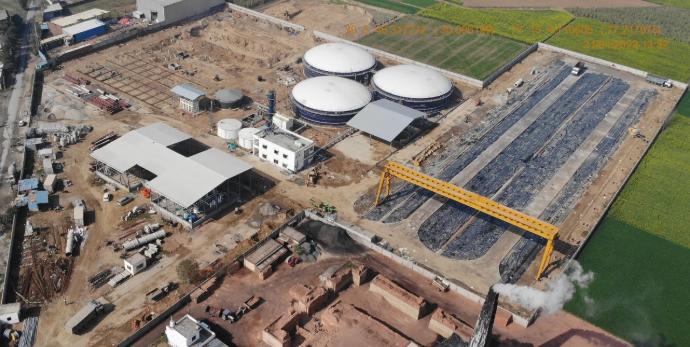
Designing and constructing a biogas plant capable of handling 200 TPD press mud and 16 TPD paddy straw as raw materials, with partners SeeGreen, Texol and Dhanlaxmi. The plant produces compressed biogas stored in cascades at 200 bar, alongside granulated organic fertiliser (PROM). The project requires storage of over 36,000 tonnes of substrate, covering a total area of 4 hectares.
Integrated Waste Pilot Plant
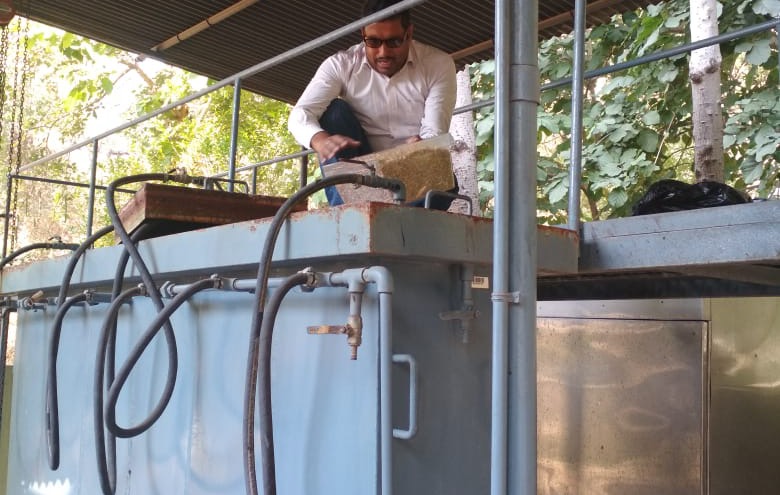
A pilot plant at TERI University (The Energy Resources Institute) for the co-digestion of rice straw and human faecal waste. The team developed a bespoke reactor with an enhanced acidification and methanation process, capable of handling a one cubic metre volume and operating at an organic loading rate of 5% dry solids. This pioneering work subsequently led to a patent.
Wastewater Sludge Treatment
In partnership with Veolia, participation in the development of a wastewater treatment plant in Nilothi, in India's National Capital Region. The project aimed to valorise sludge — extracting value and preventing it from ending up in landfill.
Smart Cities Contract
The Indian subsidiary received a Letter of Award from the Pune Smart City Development Corporation for the construction of 20 sludge treatment solutions. The project was backed by the Japan Investment Co-operative Agency.
Bioenergy Waste Stream Lab Tests
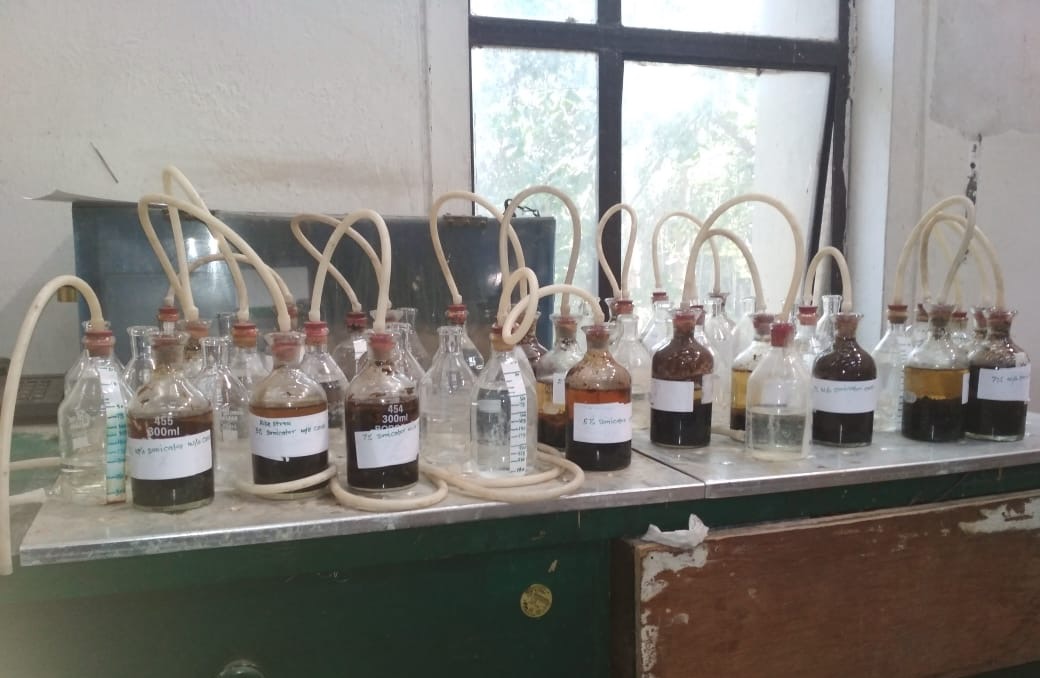
Collaboration on a 4-megawatt electricity plant designed by Dr. Nitant, with a processing capacity of 20 tonnes per day of rice straw and cow manure. Harmaan oversaw the installation of two biogas agents, each capable of producing 2 megawatts, and the implementation of waste heat recovery systems to regulate digester temperature in the continuously stirred tank reactors. Beyond design and construction, the team was instrumental in operationalising the facility — installing mechanical stirring equipment and fitting electrical and mechanical components once civil work was complete.
Biofuels Testing
An integral role in the development of a Jatropha plant, a key source for sustainable biofuels. Jatropha produces seeds which can be processed into oil by mechanical pressing, then transformed into biodiesel through methyl esterification. In collaboration with the Automotive Research Association of India, and with support from Mercedes Benz of India Limited, the team was responsible for comprehensive automotive testing of the biofuel.
Biofuels Policy Advice
Collaboration on the development of the Galvanising Organic Bio Agri Resources (GOBAR) policy, which later evolved into the Sustainable Alternatives Towards Affordable Transportation scheme. Together this secured a guaranteed price for the offtake of biomethane from India's government-owned oil marketing companies — the Public Sector Units that refine and retail petrol and petroleum products — creating a stable and viable market for alternative fuels in India.
Rural Sanitation
Consultancy services for the Ministry of Drinking Water and Sanitation in India, focused on affordable, on-site sanitation solutions tailored for rural areas.
Development of the Nelson Bioenergy Recovery Plant
Development of a 20 TPD facility at the Bell Island location, in collaboration with the local council subsidiary, to divert industrial waste streams from the York Valley landfill. The facility will process mixed waste streams — including sludge, cowshed waste, spent grain, apple pomace, grape marc, hops residue and fish waste — using a combination of anaerobic digestion (AD) and thermal hydrolysis (TH) technologies, with named partners Kernohan, Beca, Texol and SeeGreen.
National Policy Advice & Trade Missions
ASL's work has been recognised through the Orion Impact Award, the EY People's Choice Award, Ākina Impact Funding, the UNDP 1st High-Level Meeting at the AIS Forum, the Asia Foundation NZTE CleanTech Mission, Mātauranga Māori's Role in Decarbonisation, and the Creative HQ Climate Accelerator. ASL is regularly sought for national policy advice on land application standards for biosolids, carbon policy, green fertiliser standards and freshwater policy — working with the Ministry for the Environment, the Ministry for Primary Industries, and government ministers.
Recovered from the previous Alimentary Systems website (2021–2026); photographs are ASL's own from the projects shown. The thinking behind this work is set out in Transitioning from a Coal-and-Oil-based Energy Economy to a Bioenergy Economy. What we are building now is at Solutions and Impact.