
# This hui was held Wednesday 28 July, 1:00 pm-2:15 pm NZST online.
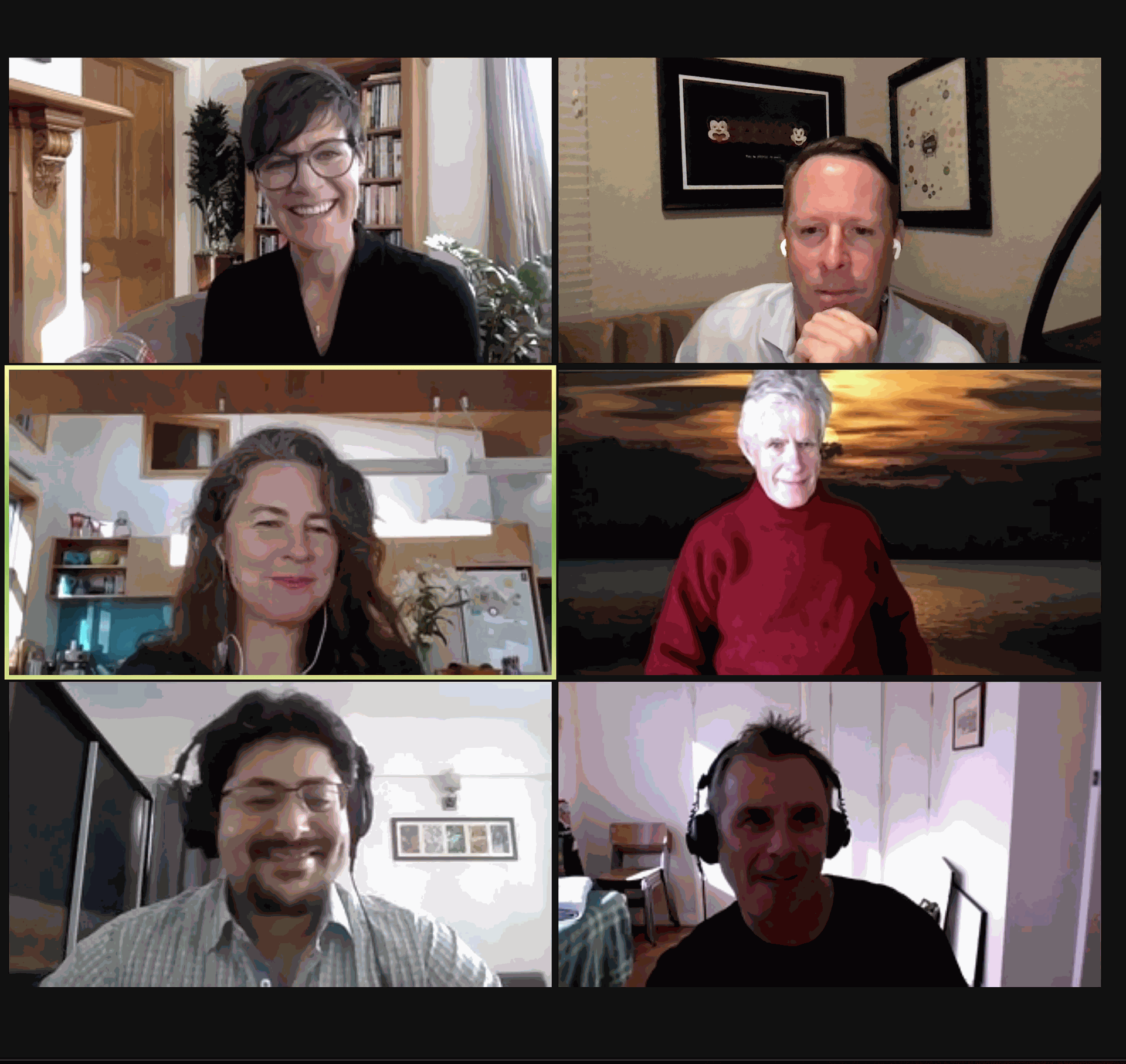
The hui was attended by members of Nelson and the surrounding community, including representatives of Nelson City Council, Wakatu Incorporation, Department of Conservation, Cawthron, a representative of the Nelson Regional Regional Sewerage and Landfill Services, the Nelson Regional Development Agency, renowned freshwater advocate and scientist Mike Joy and business leaders concerned with climate change from the Nelson Community.
Circular economic models offer Nelson City Council a new approach to waste minimisation. Nelson has an opportunity to lead the way nationally and prevent discharging wastewater to land and the ocean. The hui invitation is here.
The aims of this discussion
- Collaborate with local iwi and environmental impact groups in Tai Tauihu
- Gather data from the council for wastewater sludge treatment to demonstrate a total cost of ownership comparison
- Integrate into food waste policy & green waste policymaking via education with council partners
- Collaborate with primary & horticultural industries
# The karakia begins at 1:13 and was given by Johny O'Donnell.
# A transcript of the questions raised during the hui is below.
39:19 Yachal Upson - Novology Enterprises Limited
Thanks, Jody. Thanks, Matthew and Harmann, for the presentation; certainly that was, that was quite informative, those couple of things popped up for me. I think you addressed my first question, which was that of the challenge of consistent feedstock supply. Yes, we're dealing with a waste stream basis here, but we're also talking about the potential to take a number of other feedstocks from the region. I'm aware that in similar projects around the world that consistency is a challenge to achieving reliable digestion and outputs. It seems like you've partially addressed this or mitigated this with the modular digestion process. That seems quite robust. But what are what additional supply needs and limitations are there in regards to your system and purchase to the second supplemental question to get out and done with. That was, I have now is the value of the output streams affected when input waste streams are contaminated with plastics and chemicals. So, I'm collaborating presently with a master's thesis in regards to some sampling of effluent discharge in the Nelson region for microplastics. We're aware that it is quite an issue. And there's also some research happening out of Canterbury University, which some of our local providers with regards to plastics in sludge to land. So, what are the further supply needs and limitations around stability, and one of the impacts on value output from contamination and particularly plastics? Thank you.
41:08 Harmann Madon - Alimentary Systems
Thank you for those questions Yachal. They're absolutely on point. So, like I mentioned, the whole point of having batch type digesters like you recognised is to provide a degree of insurance really in its operations. In terms of the variability of the feedstock as to what the system can manage. It's about the ratios of the incoming material. And we recognise that this will never be consistent. And you're absolutely right; the digestor systems are vulnerable because they cannot have a consistent waste stream insured around the hour. So the variability could be from a sludge to green waste proportion of one is to one, going up to a sludge to Green Waste proportion of potentially as high as one to four. The other opportunity, or the other, mitigation strategy we do have is apart from the batch type digesters. We can also vary the retention time in the plug flow digester because that is essentially what we call a "a first in first out" or a FIFO digestor. So after we stabilise the waste mix within the batch digester, we vary that retention time and then pump it into the plug-flow digester only once we're confident that it's not going to overwhelm the system. And which is why the leachate that is collected in a sump, from each individual batch type digester gets circulated through the CSTR, and that's essentially to homogenise the bacterial culture that's going to be working on that waste. So, the interesting part of it, which we perhaps haven't spoken about yet but what Matthew and I are working on is the next level which is essentially having a form of feedback process controls that can then, with a degree of artificial intelligence, actually manage the entire system on its own. So, the quick background to that is that my personal engineering background is in the automotive sector, particularly in powertrain systems. And when I started working with biofuels, when I started studying the way digesters work, I realised that they are what we call open systems. They're not closed-loop systems. So the degree of process engineering innovation that we're bringing is to develop a similar closed-loop to sort of a system that you would find, you know that you don't even think about in your car, where the system is continuously adjusting to the variations in, you know your throttle input, the road conditions the fuel quality and bringing some of that operational refinement to a digestive system. Coming to contaminants within the waste, yes, there are screens; the waist has to be screened; these are mechanical screens before they get put into the digester by mixing the waste streams. We also recognise that there's a degree of dilution that can happen, but also very importantly because we have a thermal hydrolysis process, as the first stage in that thermal hydrolysis process, we're applying pressure in steam, which, you know, it's 2bar 135 degrees Celsius so we recognise that not only is there a dilution of whatever contaminants are possible within that given waste but there's also the tendency to neutralise or make it inert, to a degree, we can reduce that significantly we cannot eliminate it, so that's my honest answer.
45:20 Matthew Kidson - Kidson Group
Okay, so I had a clarifying question, so I understand that your economic model is that you No capitol down model for a territorial authority that you, that can access funding from the Edmund Hillary Fellowship and Alimentary will fund the pilot, and you just require the waste stream. And the levy that would have cost to take it, or just free issue of the feedstock.
45:50 Matthew Jackson - Alimentary Systems
I'll take that. Gate fees are still part of the model. Right now, wastewater sludge disposal probably cost the Council; I mean, they'd sent nearly 4000 tons of wastewater sludge to landfill in 2018, probably cost between four to five million dollars. And it just sits in a landfill, and there are still emissions, so yes, gate fees are a part of the revenue model. But if Council was to own it, then it's going to try to minimise its own cost structure; if an Iwi was to own it, or a private entity, it would trying to maximise its own revenue. The reality is what's changing in the New Zealand environment is that a combination of increasing gate fees rates are increasing, and so is the ETS (Emissions Trading Scheme). And so, the changing economic environment is what's driving the effectiveness of us creating a bioenergy industry when none has previously existed. Does that answer the question?
46:48 Matthew Kidson - Kidson Group
Yeah, yeah, that that does. Thank you. My second question, bluntly, is, how do we know this works? That is the process? I've been privileged to an earlier conversation where you've outlined some of this, but I believe it's been a pilot plant down and trying to remember back university that I see some pretty familiar processes there. Is there anything particularly unusual or groundbreaking, other than that you bring two waste streams into one process?
47:22 Harmann Madon - Alimentary Systems
So I'll answer that. So, there isn't anything particularly groundbreaking yes, the process has been patented, so there is a degree of technical differentiation from whatever else is available. The development of electronic control systems with artificial intelligence is still, still a work in progress, but that's a significant degree of novelty in such a system. But Matthew humbly, I submit to you today that what we're seeking to do is build a technology demonstrator. We're not saying that we're going to come into Nelson and treat all of Nelson Swiss today; that would be far too bombastic a claim to make what we have said is we want to build a technology demonstrator of a minimum viable size in collaboration with a Council in New Zealand, using waste streams that are locally available in order to demonstrate the efficacy of the process and refine it. So, to also be completely frank with you, what works in Nelson, will not work like for like in saying the need and, or work like for like in Dunedin or Auckland, that there are going to be variations and there is going to be variability within that process itself. So, once again, our humble submission is we're looking to build a demonstrator of minimum viable size. In New Zealand, utilising waste sources that are locally available.
49:00 Matthew Jackson - Alimentary Systems
Can I add that the bioenergy industry in Europe is very mature, the Bioenergy industry in New Zealand is only just starting. There are some pretty significant differences up in Europe, half of the infrastructure cost is funded by the government, there are major subsidies and they grow stock for these types of plants. So, you know we can reference where this is occurring globally, overseas in many different locations, but it's not as it's occurring in New Zealand but nowhere near the level that it could be in the scale that it could be to deal with some of the problems that we're facing in relation to leaching into landfills discharged, and if you'll be sleeping under a rock if you haven't seen people driving tractors down the main street, you know, we import $100 million of 100 million dollars per annum of phosphate in order to provide synthetic fertiliser to farmers. We put this sort of vermification process; We can use the agriculture industry waste to create a fertiliser product that prevents nitrates from going into our water stream. So there, there are many applications that we can look at. Now all of those requires testing. That's why we need local science partners, because we can't take anything out of this planet until we've gone through and tested it and got the right simplifications before it can be applied to land, so there it's not just looking at the plant technology and making sure the efficacy of the plant technology is working. It's the entire model. And our vision, once we, once we believe that these waste streams start to surface, we actually think there's a competitive marketplace in the whole market economics will change, and the plant will should be smart enough to know what it needs and then go out to the market and say we're willing to price these or we're willing to price for this waste at this cost, and we need it this time. Right, and so that there's this whole economic model that can come into it, once you start to open up these technologies and raise people's awareness to the fact that there's a value in the waste stream.
50:00 Jodie Kuntzsch - Facilitator
Thanks, Matt. I have a question from Jeffrey and then Nathan; I'll come to you and then Laurie I have your name here. Jeremy, would you like jus to read your question out? - 'So biodigesters are established, technology, and have been investigated in the region over recent years. Have you looked into these proposals and why they were considered unviable?"
51:36 - Harmann Madon - Alimentary Systems
Not everyone on this call knows that I was in New Zealand for a few weeks last year, but I was. In that time, I went to the three large urban centres, and I was in Christchurch, and I met a very interesting gentleman at Christchurch City Council, and he was kind enough to show me a proposal, and then actually scan it, make a PDF, and send it to me. I value that tremendously because it goes back to a time when I was still running around in shorts. Right. And this is a gentleman who still works in infrastructure at Christchurch City Council and he was incredibly frustrated that New Zealand has not has not embraced bioenergy, when it's it's obvious right for a country which is such a large producer agri-food products that it's not doing this so it is counterintuitive and that's a great question and I faced this all the time. So, it's a question that I have asked, and at times I felt somewhat rhetorically to my business partner Matthew. For example, and he later mentioned to me that in New Zealand, people like to see something, and there is a belief that if something's been done somewhere else. And if it's worked there, then it's probably something to consider. In New Zealand, but like I said I'm still new to the country. So I don't understand the 'why not'. What has changed since then in 40 odd years is that now. As I said, there is an enabling policy environment that's beginning to emerge. So there is a recognition that there has to be an environmental consciousness, and there is going to be a price attached to not doing something so ironically, the carrot approach might not have worked but the stick approach is probably what is going to work now. Or maybe I'm still just hopeful and foolish, but Matthew would like to add anything to that.
53:40 Matthew Jackson - Alimentary Systems
Yeah, I mean we, there's a, there have been approaches for seaweed. So we can talk to that, there have been approaches for fish waste, and we can talk to that. Still, very specifically, what we're discussing here is wastewater sludge, which is, has very specific properties that many people don't like to take on and also the pairing of multiple waste streams. So these concepts are starting to work their way into Council policy, but right now, the only place that they're operating or planning to do this type of scale is Auckland and Waikato, in Reporoa. So, you know, it really comes down to individual use case; we can speak to the differences between the approach that we were, we're looking at, and those that other biogas digesters are looked at. And as Herman says, also the unit economics have changed in relation to the pricing, the known constraints that are now being put on waste, you know, in a local council you look at businesses, you know, we're switching off coal, coal, burners in the primary industry. Everybody has a waste minimisation plan. So also what's changing in the environment is our awareness around what we have to do with, with things (waste).
55:20 Nathan Clarke - Nelson City Council
Thank you very much. My role as general manager of regional services but Nelson city council and Tasman district council so I run the landfills, and the wastewater treatment plants, or the regional facilities. So you do have a bit of factual information. Nelson is actually a really, probably at the forefront of biosolids or sludge use with a New Zealand, we already reused, 100% of the material that comes of facilities, so we digested in an aerobic treatment plant, not an anaerobic one, we do have a plan to put an anaerobic one in the back end of our 10 year plan the plan material gets used as a fertiliser product or spraying into a pine plantation that increases the growth of the pine plantation by about 30% and increases the revenue from the pine plantations in the region, significantly. So there's in place already. Any level wouldn't foresee a need for an anaerobic digester I believe I'm open to it. My landfills have Gas Utilisation facility, so we send out guests to the Nelson hospital, and it runs the boiler at the hospital, so we have some facilitiy there already. We are investing quite a lot of money, so overall, I mean, I think we're actually at the forefront of some of this technology we don't have an anaerobic digester in place at the present time, my prior history is by the 20 years of design and build of anaerobic digestion systems around the world, as a developer. And what I would say is the New Zealand environment in a policy environment, and economic environment isn't a good space for this at the present time, the ETS doesn't allow us to actually recover money from the sale of gas and those things currently, so it's not a good thing. And I want to see that if you really wanted to do this, probably Marlborough is a good spot in the South Island because of the 50 or 60,000 tonnes of Grape Marc that's available here, whereas Nelson doesn't have that readily available source of material. Our estimates of organic material is around 8,000 tonnes a year of readily available organics that would be that could be diverted from the landfill and green waste is already composted within the region so there's commercial composting facilities that take that, and that's pretty much all diverted from landfill already. I mean, we do, we do have quite a lot of information. If you are able to provide a facility. Then I can't see a reason why we couldn't get a piece of land for you to put it on to try it out. There's no reason why we couldn't. But I, you know, I feel that you would be wanting to look at your economics very much more carefully than you have at the moment, because in my experience, then after 20 years this isn't an economic proposition. That's just, that's my, my state.
58:43 Matthew Jackson Alimentary Systems
Nathan, I really appreciate you taking the time to join this call. And also I think being able to have a further conversation with you about your experience would be very useful for us. Would you be open to having that discussion and a little bit more detail and, but we'd be very open to showing you the economic models that we're working with. For us, for us, there's no basis for it until we have the raw data, but then, the key thing that you've said that, that's what we're looking for is his cooperation with counsel when potentially a place to put a technology demonstrator and if that's something that you're open to discussing with us, then that will make us very happy.
59:27 Nathan Clarke - Nelson City Council
If it's not going to cost the region, money in that sense and why wouldn't be involved in and doing something, to me, it makes no sense to avoid it. So, I'm more than happy to discuss my previous experience, I mean I literally have built 50 of these plants around the world so I, you know I've done done this many times as commercial operator so I sold our business to ADI systems, and then on to Evoqua so you know that's an established technology that has been put in many times so more than happy to talk.
1:00:15 Matt Lawrey - Nelson City Council
Sure. Thanks, cure everyone. Yeah, I agree Harmaan, that line if something sounds good too good to be true, might be because it is; whatever the line it came to my came to my mind as well. Just wondering about this demonstrator. Is that, is that a 50, tonnes per day model, or is that something smaller
1:00:42 Harmann Madon - Alimentary Systems
Considerably smaller Matt. So, in terms of a pilot plant that I built in India, it was one tonne per day. In New Zealand, from the economic model that Matthew was referring to earlier, we estimate a seven tonnes per day is what is a minimum viable size; of course, we'd love to run these numbers with Nathan once again, to see how accurate we are we are or are not. But that's the scale, really in terms of protect demonstrator to seven tons per day is really, it doesn't sound like a lot, because as we know from the figure that Nathan mentioned that 8,000 tonnes a year of organics to landfill that could be diverted so it's, you know, over 200 tonnes per day potentially of waste treatment capacity that's required. And, sorry 20 tonnes per day, required so seven tonnes is a really small size.
1:01:38 Matt Lawrey - Nelson City Council
How much land would it require?
1:00:42 Harmann Madon - Alimentary Systems
So as for the design that we've done, it's 625 square meters. That's 25 meters by 25 meters, so that's, It's really a quite compact footprint.
1:02:34 Mike Joy - Victoria University of Wellington
It's Mike Joy. I just wanted to respond to something that Matthew said, in relation to nitrates and phosphates from agriculture and how we could be using them and not losing them, but I just wanted to make the point that only a tiny proportion of them come from out of a pipe, i.e. dairy shed waste, and by far like 90% or more, is in the paddock and diffuse so you can't capture that. That's, that's going into groundwater and through the soil into streams and that kind of thing. So, that is not available for this kind of system. And, and I just in general, I have built my own Biodigester, I built one at the uni, and I know that Agresearch have run a whole dairy farm on a biodigester in the 70s down and Invermay (Campus) in the 80s. And there are a number of biodigesters on dairy farms in Canterbury and different places around New Zealand I mean, you know, it has been an as being done. We also had one at Massy University. We had an issue with dead whales and all kinds of giant animals that the feed school were chopping to pieces and we set up a big digester for that as well to save cremation because they were cremating them, but the students didn't like all the ash landing on their heads and so, you know, I mean there is, I guess, you know, Nathan touched on this so much of this stuff already known and being done it's, it's I'm trying to figure out what's, what's different about this proposal. I couldn't; I couldn't really see how it differed from many of the existing ones.
1:04:47 Harmaan Madon - Alimentary Systems
So Mike, firstly, great, great to see you on this call. Thank you so much for joining, and there's so much more that we can learn from you in how we approach this. Like we've said, our focus has been on trying to minimise the emissions from waste, which, while I agree, are not as significant as the emissions from agriculture. They are not insignificant. And so there is an opportunity there to utilise that waste or process that waste in a more efficient manner. Yes, if there are things that could be done, you know, learning from you and working with you in terms of trying to see how we can improve the outcomes from agriculture, particularly in the use of nutrients, or the loss of those nutrients, then, that that conversation would take us in a whole other direction, and I, I would love to have that conversation with you I just don't know. Just now is the right time. So, okay, we could reconnect these.
1:05:58 Matthew Jackson - Alimentary Systems
Yeah. And just to add to that, for us the reduced nitrates on land is more around the supply organics fertiliser. Something that we see is a higher nutrient value from the mixing of waste streams that being, we would like to see some type of agrigro certification. And then that on the land versus synthetic fertiliser is what we're thinking. So I'd be interested in your feedback on if you've seen any of that work happening in New Zealand.
1:06:35 Mike Joy - Victoria University of Wellington
Yeah, now there's just the minutes that is happening but there's with theory there is so they're so careful, in some cases when anything related to human waste, and holding times and all that kind of thing is that there's a lot of fear around potential for the spreading of disease but. But no, no, I think that's a really good point, you, it's about replacing that synthetic fossil-fuel derived nitrogen fertiliser. And then, and, you know, that would be a real big value from it rather than trying to capture any of that part from theory sheet based and do your process on it.
1:07:10 Harmaan Madon - Alimentary Systems
So that's what we're trying to do what we also need help and assistance for from you and from the community here today is that we recognise that a degree of testing has to be done. And in terms of managing the pathogen issue. As part of the process, like I mentioned, we do thermal hydrolysis at the start, where we elevate temperatures to 135 degrees Celsius and pressure off 2BAR, which in the testing of the digestate at lab scale we were able to see that, you know, all pathogens were neutralised and this is for all the four broad classifications of pathogens, including bacteria, viruses, protozoans and helminths as well. So, the neutralisation of helminths does, you know, does not always happen in an anaerobic digestion process, at atmospheric temperature range but because of this additional step of thermal hydrolysis. I think we can address the pathogen concerns, in terms of testing the digested for pathogens is one part but in terms of the agronomic rates for that application to a specific crop that is still a work in progress, but you know any help from you around that will be grateful for.
1:08:39 Matthew Jackson - Alimentary Systems
Yeah, and Mike just the other thing to consider. I think there are plants that are doing this, of course, but the wastewater treatment plants aren't combining green waste with wastewater sludge, and so amount of bioenergy they create is only enough to offset the plant. Even then, we're still seeing wastewater treatment plants as being a huge, a huge emitter and actually a large source of carbon emissions for most councils, wastewater sludge is often excluded from the emissions plan. When it comes to, when it comes to council plans, Wellington Council, we presented to the board, about two, two years after they started their planning process for their wastewater treatment, and they're looking at an aeration process which is forecast to cost nearly $210 million, but wanting to counsel if they put an anaerobic digester, and we think it would probably cost a third of that, and return, economic value to the community. So, agree we're talking about an established technology that's widely deployed in Europe but it's not widely deployed in New Zealand, and fundamentally that's because we've been a very low land cost, and we haven't had the, the negative incentives on actually dealing with this waste in a way that takes care of the environment. You know, we're not even saying, you know there's an RFP out from Dunedin Council at the moment for wastewater trade-off for green waste treatment, there's no discussion around bioenergy, you know, the way sort of very progressive approach taken by Auckland City Council Sustainability team to underwrite the plant and reparar with a steady, a 30 year commitment right and that was the most progressive risk that I've seen a council take, and it comes to these types of technologies. But if you think about the work that Simon was doing with Rotorua. You know, they started that work 10 years ago, we have the type of technology in New Zealand to solve climate crisis. The challenge here is having said at the beginning of this is it's not that we don't have the technology we were just not applying as widely as we should. And for us, the, this is about the urgency of climate change, it need the rapid adoption of these technologies to start to address climate issues, and start to pull back the covers on actually what the full, full supply chain looks like when it comes to waste, and even bring it back into the home, bring people's awareness back to the fact that they put you know banana skin or peal into the, into the rubbish bin that that's lost energy if they, if they put, put it down the InSinkErator, it's a lost piece of energy, you know, we need to think differently about the fact that everything we have is an energy source that can be converted, rather than an energy source that we extract and I know that I'm preaching to the converted. Right, I know that you're a big advocate for this. So, this is more for saying hey, yes, we recognise that but you know, if we're going to see if we're going to really make a difference in climate we need to we need to realise that it's not about a return on investment from existing assets which are waste minimisation, it's a shift to a circular economy model and a rapid acceleration and so we can evidence to other organisations and other councils yeah this is a good way of working with our waste we extract value from it, we prevent climate change, and we restore and build up economic like really build up an economic framework for investment and community, and, you know, I'm. Personally, I'd love to dig deeper with you I think Harmaan has been looking forward to talking with you, and when he saw you were joining us he was bloody over the moon and I'm so glad that Nathan's on this call, and to learn that he's got experience, this is why we are trying to have the public conversation rather than have it behind closed doors. So, I'm over the moon, to be honest with you.
1:12:40 Mike Joy - VictoriaUniversity of Wellington
Yeah, that's good, and I'm keen to talk some more. I just my experience with animal waste is that, you know, haven't used that analogy of the cow's guts that trouble is that it's already been through the cow's guts or the, you know, in its head, most of the energy removed from it. So the biological waste is a tricky one to get enough energy out of, to make it worthwhile, but when you combine it with the other stuff like you're talking about then, then it's a real goer and yeah I'm really supportive of this rather than discharge to water. Although you're going to land and growing something and making compost on, I'm pretty keen on as well. But yeah, just, just on keen to be involved, so keep in touch
1:13:24 Harmann Madon - Alimentary Systems
So, just if I could provide a little context, the whole intention of combining these disparate waste sources, was when I tried to develop a low cost, low energy sanitation solution for India, right, which is the country where I was born and where I grew up. And what I recognised was that even if there was funding available for the capital investment in setting up a sewage treatment plant or a wastewater treatment plant, there was not enough funding available to operate these plants because of the high energy requirement. Right. And so it was a little bit of a eureka moment when I recognised that you know if you can reduce the energy need for the wastewater treatment system, then you can ensure that it's going to work more consistently. That was one secondary when it came to the waste substrate itself, because I was working on upgrading biomethane from a wastewater treatment plant in Bristol and utilising that as an automotive fuel, that's when I began to study this process, so my background is not in life sciences, it is not an environmental engineering. Right. But that's when I recognise that even while we could demonstrate the technical feasibility of running a car on by within the project would didn't make sense because you could not recover enough methane from waste. So like you said, you know the energy potential is low because it's already been digested. That's when I began thinking about the problem further. And I realised that the problem statement was essentially the high amount of nitrogen that's contained in waste, and that precludes the further digestion within a digester, because that leads to suffering of a digester environment. So the next step, what do you do next? You need to add supplementary carbon, and that's when I recognise that in a large agricultural market like India, we burn 325 million tons of supplementary biomass every year in India. It's a major contribution to air pollution. And that's the; you know the final eureka moment was what happens if we combined shit and you combine crop residue, and then see what happens, and it worked like magic in the laboratory. Right, and that's when the whole thing about building a pilot plant. But of course, all of that is history. But that history is, is I think relevant here because it's, it, it's been a stepwise process Mike, it's been about trying to solve one problem at a time, in terms of getting this system optimised. So that's an approach that we're trying to take.
1:15:15 Jodie Kuntzsch - Facilitator
Thanks Hermaan. I am I'm conscious of our time that we're past 215 now. And so I just wanted to say thank you again for everyone taking time to join in the conversation here, and also to say that it sounds like there's a lot, a lot of follow up connections and conversations to be had. And I know that Matthew on how many are going to be able to circulate even thanks websites contact details and all of that we'll make sure it gets up to everyone, so that you can continue to connect and continue the conversations. Johnny, can I put you on the spot again? Would you be willing to do a closing Karakia for us?
End
We have attempted to capture the discussion as accurately as possible. The text has been transcribed by Otter.ai and minor grammatical updates by Grammarly. If, for any reason, this doesn't accurately represent the discussion, don't hesitate to get in touch with us.
**