
New Zealand's Water Management Issues
Regulatory Framework
- Until February 19, 2025, New Zealand did not have water standards
- By September 2025, all councils must submit plans to Taumata Arowai (the wastewater regulator ) on how they will meet new compliance requirements
- 60% of council wastewater treatment plant consents will expire within the next 2-5 years, requiring new solutions
Current Infrastructure Problems
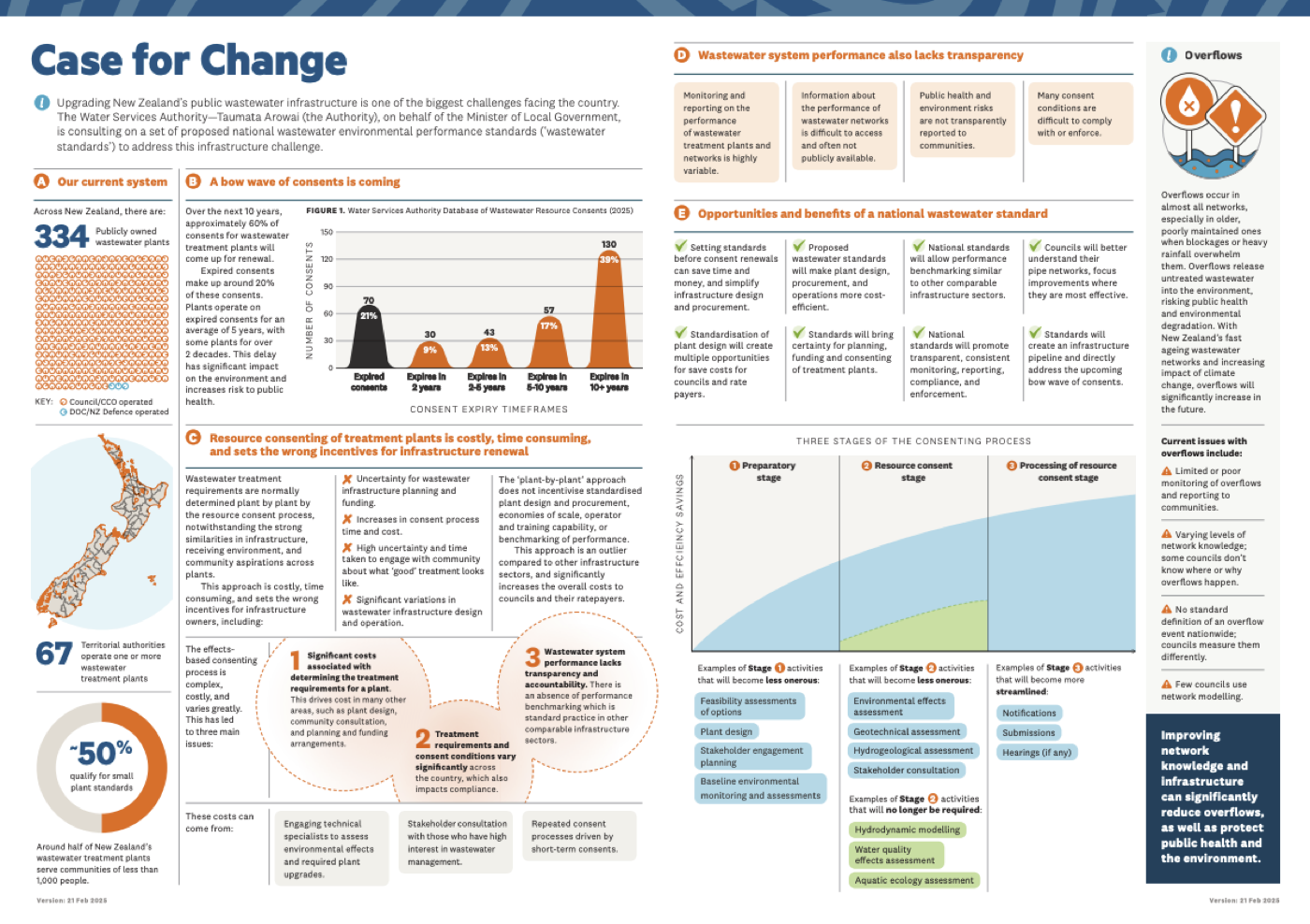
- NZ has 334 wastewater treatment plants across the country
- Most rely on passive "settling ponds" systems that won't meet new standards
- Active treatment systems require significant energy, but NZ's energy supply is already constrained
- 45% of emissions from wastewater treatment come from disposal and energy consumption
- Examples of current issues:
- Auckland: Sends sludge to Puketutu Island (offensive to Mana Whenua)
- Wellington has been landfilling its sludge
- Queenstown: Sends untreated sewage into the Shotover River, which feeds into Lake Wakatipu
Alimentary Systems' Solution
- Uses biomethanation/anaerobic digestion + thermal hydrolysis in a new method to recover 4- 10X more energy from sludge than current methods
- This energy can power wastewater treatment plants.
- Co-digestion with other organic waste (food waste, grape marc, DAF sludge, fish waste) produces more energy than is needed to run the plant
- Blending C:N ratios instead of denitrifying ponds reduces costs below the current council disposal methods
- Provides better environmental outcomes:
- No waste to landfill
- No methane emissions
- Reduces nitrous oxide emissions
- Potential to produce fertilizer at 2/3 the cost of the synthetic alternative
- Scale of the Current Issue
- 21% of New Zealand's 334 wastewater treatment plants are currently operating with expired consents
- Another 30 plants will have consents expire within 2 years
- 43 more plants will have consents expiries in 2-5 years
- 57 additional plants will have consents expire in 5-10 years
- In total, 60% of plants will require upgrades within the next decade to meet regulatory requirements
Proposed Standards Framework
- Different standards for discharges to water versus discharges to land
- Inclusion of beneficial reuse of biosolids standards
- Standards for overflow and bypass arrangements during emergencies
- Coverage of discharges to land, air, water, biosolids, energy use, and trade waste
Technical Parameters
- CBOD (Carbonaceous Biological Oxygen Demand): 15mg/L standard
- Total Nitrogen: 10mg/L for lakes/wetlands, 5mg/L for rivers/streams (varies by dilution levels)
- Ammoniacal Nitrogen: separate standard of 3mg/L (90th percentile annual)
- E. coli standards vary significantly based on discharge location and dilution levels
- Compliance metrics based on 90th percentile measurements (allows non-compliance up to 36 days/year)
Notable Exclusions
- Discharges to air from wastewater treatment plants (methane, nitrous oxide)
- Recycled wastewater for non-potable use
- Endocrine disruptors, heavy metals, and PFAS contaminants
- Private networks and on-site treatment systems (e.g., septic tanks)
Professional Opinion
- Strengths of the Proposed Standards
- Establishes a baseline regulatory framework where none previously existed
- Creates infrastructure planning certainty for consent renewal processes
- Standardises plant design opportunities for cost savings
- Includes provisions for biosolids beneficial reuse
- Concerns with the Proposed Standards
- Inconsistent Standards: Different standards for different discharge environments could create regulatory complexity and potential loopholes
- Measurement Issues: Using 90th percentile annual measurements allows for significant non-compliance periods (up to 36 days/year)
- Nitrogen Thresholds:
- The 10mg/L nitrogen limit is below WHO guidelines (11.6mg/L) but significantly higher than what environmental advocates like Dr. Mike Joy recommend (0.6mg/L)
- Separate limits for total nitrogen and ammoniacal nitrogen could result in combined nitrogen levels exceeding WHO guidelines
- Dilution Ambiguity: Terms like "low," "moderate," and "high" dilution for rivers and streams lack precise definitions, creating potential enforcement challenges
- Exclusion Gaps: Private networks and on-site treatment systems being excluded create significant regulatory loopholes
- Bypass Provisions: Standards for overflow and bypass arrangements could potentially be misused as workarounds rather than last-resort emergency measures
Opportunities for Improvement
- Standardise to a single strict standard across all discharge environments
- Define dilution levels with precise technical parameters
- Reduce or eliminate the 90th percentile compliance window
- Lower nitrogen thresholds to align with the best environmental science
- Include private networks and on-site systems in the regulatory framework
- Establish stricter criteria for bypass arrangements to prevent misuse
Market Implications
The standards create significant business opportunities in wastewater infrastructure upgrading. Approximately 200 treatment plants require upgrades within 5 years to meet regulatory compliance. This suggests substantial investment opportunities in renewable energy integration and biosolids management technologies to help wastewater treatment plants meet these new standards.
- Invest
- Contact Us
- # Taumata Arowai Wastewater Standards